

Pack fragile items individually with packing paper or bubble wrap, use boxes that leave enough room for cushioning, and fill gaps so nothing moves when the box is lifted. Keep heavy items below lighter ones and clearly label every box that needs careful handling.
Knowing how to pack fragile items safely comes down to three things: wrapping each piece individually, choosing a sturdy box that fits properly, and filling empty space so nothing shifts in transit. Whether you’re moving across Greenville or relocating elsewhere in North Carolina, the right packing method can help protect dishes, glassware, electronics, artwork, mirrors, and other breakables from bumps, pressure, and movement along the way.
| Fragile Item | Recommended Materials | Box Size |
|---|---|---|
| Plates and bowls | Packing paper, bubble wrap, dividers | Small to medium |
| Glassware | Packing paper, cell dividers, bubble wrap | Small |
| TVs and monitors | Original packaging or TV box, foam corners | Specialty TV box |
| Small electronics | Anti-static bags, bubble wrap, packing paper | Small to medium |
| Artwork | Glassine paper, cardboard corners, bubble wrap | Picture box |
| Mirrors | Painter’s tape, cardboard corners, bubble wrap | Mirror box |
| Decorative pieces | Packing paper, bubble wrap, foam | Small to medium |
What’s the Best Way to Pack Fragile Items?
The best way to pack fragile items is to prevent both direct impact and movement inside the box. A fragile object can be thoroughly wrapped and still break if it has enough empty space around it to slide or collide with another item.
Choosing the Right Box Size and Padding
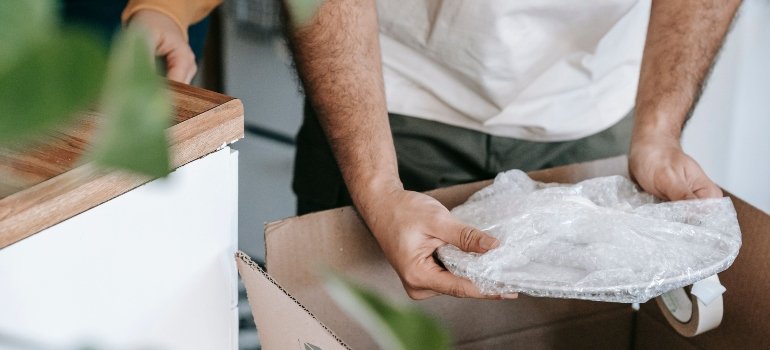
Choose a box that gives your item enough space for cushioning without leaving excessive empty room. For most breakables, you want several inches of protective material between the item and the box walls.
Start with a layer of crumpled packing paper or another cushioning material at the bottom. After placing the wrapped items inside, fill gaps along the sides and top. Before sealing the box, gently move it. If you hear or feel the contents shifting, add more padding.
Avoid oversized boxes for heavy fragile belongings. They become difficult to carry and make it easier for objects to move around.
The Wrapping Technique for Dishes and Glassware
Wrap dishes individually rather than placing several pieces together and wrapping the entire stack. Packing paper works well as the first layer because it protects surfaces without leaving newspaper ink behind.
For plates, add paper between pieces and pack them vertically, similar to records. This positioning can reduce the amount of pressure placed across the broad, flat surface of each plate.
Wrap glasses individually and add extra cushioning around stems, handles, and other thin sections. Cell dividers can keep glasses separated inside the box. Finish with a padded top layer before sealing.
How to Pack Fragile Items When Moving Electronics
Electronics need protection from impact, pressure, loose accessories, and moisture. Whenever possible, use the manufacturer’s original packaging because its inserts were designed specifically for the device.
TVs and Monitors
Remove cables, stands, and detachable accessories before packing a TV or monitor. Take a quick photo of the connections first if you want an easy reference when setting everything up again.
Cover the screen with a soft protective layer, then use foam corner protectors and a properly sized TV or monitor box. Keep the screen upright throughout packing and transportation rather than laying it flat beneath other belongings.
Never place household items on top of a boxed television. Even if the screen itself is padded, pressure against the panel can cause damage.
Small Electronics, Cables, and Accessories
Back up important data before moving computers, drives, or other devices that store files. Then disconnect accessories and pack each device separately.
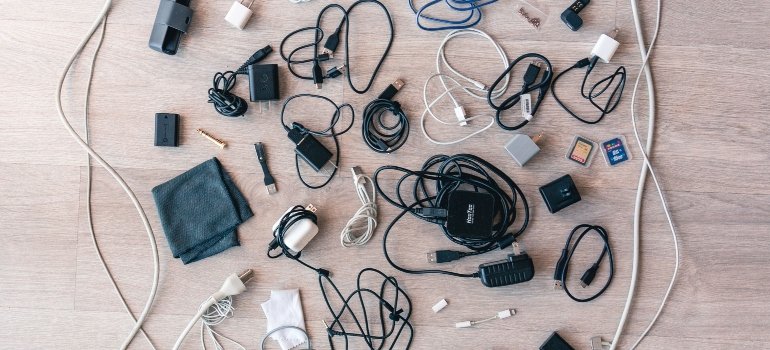
Use anti-static protection when appropriate for sensitive electronics. Bundle cables neatly rather than wrapping them tightly around devices, and label them according to the equipment they belong to.
Small accessories such as remotes, adapters, screws, and mounting hardware can go into labeled resealable bags. Keep those bags with the corresponding device so you’re not searching through several boxes after your move.
5.0 rating on Google Reviews
How to Pack Fragile Things Like Artwork and Mirrors
Artwork and mirrors need protection across their surfaces as well as around their corners and edges. Standard moving boxes usually aren’t the best fit, so picture or mirror boxes are worth using for valuable framed pieces.
Proper packing is only part of protecting sensitive equipment. Professional moving services Greenville NC residents use can provide careful loading and secure transportation for TVs, computers, monitors, and other electronics.
Flat and Framed Items
Start by protecting the face of the item. Glassine paper can be useful for certain artwork because it creates a barrier without placing potentially damaging materials directly against the surface.
For framed pictures or mirrors, protect the corners with cardboard or foam guards. Add bubble wrap around the frame and place the entire piece into an appropriately sized picture or mirror box.
If you’re packing multiple framed pieces, don’t allow bare frames or glass surfaces to rub against one another.
Oddly Shaped or Oversized Pieces
Sculptures, large décor, lamps, and unusually shaped pieces often require a different approach. Protect projecting areas first because handles, corners, arms, and narrow decorative sections tend to be particularly vulnerable.
Wrap the entire object, then choose a container that accommodates its widest dimensions without forcing it inside. Large or valuable pieces may require custom crating instead of a conventional moving box.
When an item is difficult to lift, unusually valuable, or impossible to fit securely into standard packaging, professional packing may be the safer option.
Common Mistakes That Damage Fragile Items in Transit
Small packing mistakes can leave fragile belongings vulnerable during a move. Over 40% of moving complaints are related to lost or damaged belongings, showing why careful packing and handling matter.
Avoid these common mistakes:
- Underpacking boxes: Empty space allows objects to shift and collide during transportation.
- Mixing heavy and light items: Heavy objects can crush lighter breakables. Keep similar weights together and place heavier pieces at the bottom.
- Skipping individual wrapping: One layer around several glasses or dishes doesn’t prevent them from hitting each other.
- Overloading boxes: A box that’s too heavy can split at the bottom or become difficult to carry safely.
- Missing labels: Mark boxes clearly as FRAGILE and indicate which side should remain upright.
Experienced local movers Greenville NC residents hire regularly see how small packing mistakes, such as leaving empty space in boxes or mixing heavy and delicate items, can lead to preventable damage
When to Let the Professionals Handle Your Fragile Items
Professional packing makes sense when you’re moving high-value, oversized, unusually shaped, or difficult-to-replace belongings. It can also save considerable time when you have an entire household to prepare rather than a few fragile boxes.
A full service moving company NC homeowners work with can handle packing, wrapping, loading, transportation, and unloading as part of the same move. This can be especially useful for kitchens, electronics, artwork, antiques, and other areas where careful preparation takes time.
Working with a residential moving company North Carolina households can rely on also means your fragile belongings are handled by a crew accustomed to carrying packed items through doorways, staircases, hallways, and other tight spaces. Professional movers can determine when ordinary packing supplies are enough and when an item calls for specialty protection.
Protect Your Belongings From Packing to Delivery
Knowing how to pack fragile items correctly can make the difference between unpacking your belongings safely and discovering preventable damage at your new home. From dishes and electronics to mirrors and artwork, careful wrapping and secure boxing give delicate items the protection they need in transit. Superior Moving and Logistics can help with professional packing, loading, transportation, and delivery throughout your NC move. Contact the team today to request a quote and get the packing and moving support your household needs.
